
Incubator Accessories

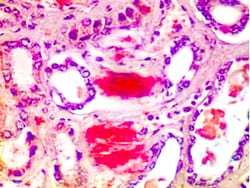
Diagnostic Biosystems AMYLOID Amyloid Stain Kit (Congo Red)
The Amyloid Stain Kit (Congo Red) is intended for use in the histological visualization of amyloid in tissue sections. Examination under a polarizing microscope results in green birefringence of amyloid.


Waters Corp Ethernet Switch Communication Kit, 8-Port, HPLC, Mounting Bracket
The Ethernet Switch Communication Kit provides essential components for network connectivity within laboratory setups, particularly for High-Performance Liquid Chromatography (HPLC) instruments. This kit ensures reliable communication between devices, contributing to the seamless operation of analytical workflows.
- Includes an 8-port Ethernet switch.
- Supplied with 2 ft and 25 ft Ethernet cables.
- Designed with a bracket for mounting on HPLC instruments.
- Facilitates communication for HPLC systems.
- Replaces parts as required.
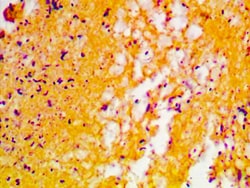
Diagnostic Biosystems GRAM STAIN KIT Gram Stain Kit
The Gram Stain Kit is intended for the demonstration and differentiation of Grampositive and Gram-negative bacteria.
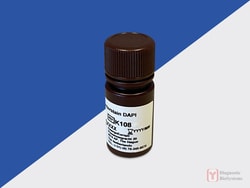
Diagnostic Biosystems DAPI
DAPI or 4′,6-diamidino-2-phenylindole, is a fluorescent stain that binds strongly to adenine–thymine-rich regions in DNA. It is used extensively in fluorescence microscopy. As DAPI can pass through an intact cell membrane, it can be used to stain both live and fixed cells.\n\nFeatures\n• This DAPI solution is optimized for use on formalin-fixed, paraffin-embedded tissue sections.\n• The DAPI solution contains an anti-freeze agent so the reagent can be stored at -20 °C without freezing.\n• For convenience the DAPI solution can be removed from the freezer and used immediately without the necessity of thawing.\n• There is no need to aliquot and freeze small portions.\n\nKnown Applications\n• Fluorescence In Situ Hybridization\n• Immunofluorescence with fluorescently labeled antibodies or probes.\n• Fluorescent staining methods.
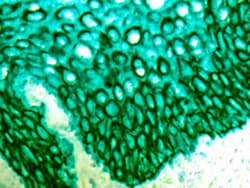
Diagnostic Biosystems PERMAGREEN PLUS/AP PermaGreen Plus/AP
PermaGreen Plus/AP is a substrate-chromogen system designed to be used for either IHC or ISH when utilizing alkaline phosphatase. PermaGreen Plus/AP has been modified to increase stability and staining intensity, producing astrong green color that is insoluble in alcohol and xylene substitutes (both aliphatic hydrocarbon and citrus based); therefore sections can be dehydrated in alcohol, cleared in xylene substitute*, and permanently mounted. However, we recommend air drying slides and then permanently mounting. This chromogen substrate system may be used for both automation and manual use.
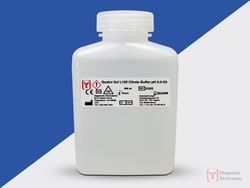
Diagnostic Biosystems QUATRO SOL I QuatroSol I 10X Citrate Buffer For Heat Induced Epitope Recovery, pH 6.0 kit/200 Runs
QuatroSol I 10X Citrate Buffer For Heat Induced Epitope Recovery, pH 6.0 kit is designed for use during the heat induced epitope retrieval (HIER) step prior to immunohistochemistry on formalin-fixed paraffin embedded tissue sections. The use of this buffer in combination with heat (often by microwave, water bath, or pressure cooker) has been shown to restore the antigenicity of proteins modified during the formalin fixation of tissue. This buffer is supplied as a 10X stock solution.\n\n
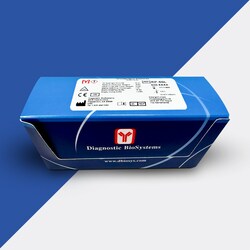
Diagnostic Biosystems PEROXIDASE Universal HRP Immunostaining Kit (For Mouse and Rabbit Primary Antibodies)
This product is intended for qualitative immunohistochemistry with normal and neoplastic formalin-fixed, paraffin-embedded tissue sections, tobe viewed by light microscopy. Clinical interpretation of staining results should be accompanied by histological studies with proper controls. Patients’ clinical histories and other relevant diagnostic tests should be utilized by a qualified person (s) when evaluating and interpreting results. This kit is designed to label specific primary antibodies immunohistochemically on tissue sections. The immunohistochemical protocol defined in this brochure is just a guideline. Depending upon tissue fixation conditions, the primary antibody employed, and the user's experience, we encourage individual laboratory to optimize its own protocol. These reagents were tested and quality controlled using tissue sections, however, they can also be optimized for cell smears and cytospin preparations. Sufficient reagents are provided to run 50 to 100 tests.
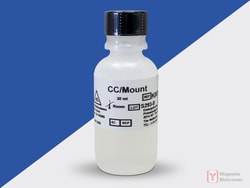
Diagnostic Biosystems CC/MOUNT CC/Mount™
CC/Mount is an aqueous mounting medium with very high refractive index. When applied to the stained tissue sections, specimens can be permanently mounted without chromogens fading. Due to the superior refractive index of CC/Mount, tissues mounted in this medium look like dehydrated specimens. No coverslipping is required with CC/Mount. However, if coverslipping is desired, dried CC/Mount can be post-mounted by using an organic based mounting medium. Advantages of CC/Mount are numerous: no coverslip, no exposure to the organic fumes, permanent storage of slides and high resolution of tissue specimens. CC/Mount is compatible with chromogens lik AEC, DAB, Fast Red, BCIP/NBT, BCIP/INT and fluorescent dyes like FITC and phycobiliproteins. The high pH of CC/Mount ensures increased stability of fluorescence.\n\nThis product is designed for permanent mounting of tissue specimens stained with peroxidase and alkaline phosphatase-based systems and various fluorescent dyes.


Waters Corp Waters Lower Drip Tray
The Waters Lower Drip Tray is designed to catch and drain fluid leaks, providing essential protection for laboratory environments.
- Catches and drains fluid leaks
- Provides essential protection for laboratory environments
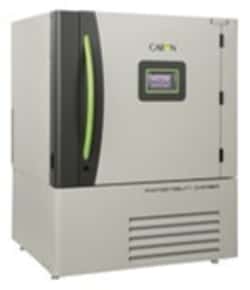
Caron Products And Services Photostability Chamber, 11 cu. ft., Option 2, Temp
Photostability Chamber, 11 cu. ft. Meets ICH Q1B, Option 2, requirements with Cool White and Near UV lamps. Temperature controlled from 10C to 35C. Electrical: 115V, 60 Hz, 15A.
Growcells WATER FOR CO2 INCUBATORS 10L CUBITAINER
Growcells Water for CO2 Incubators is double distilled, 0.1um filter sterilized, has a pH of 7-9 with a conductivity of 1-20 microSiemens (Resistivity of 50K-1 M ohm) and is terminal sterilized. The water is free of all contaminants and exceeds the specifications set by CO2 Incubator manufacturers
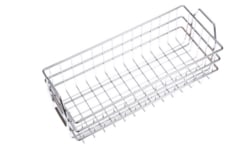
Marlin Steel Wire Products CHROME PLATED BASKET
19"L x 12"W x 3.438"H) Heavy duty, nickel plated plain steel basket. Ideal for material handling, this basket will fufill your medical needs. Can be used for storing medical equipment, faciliate the transport of medical equipment, and display. The nickel plated finish allows for a shiny look and makes it perfect for sterile conditions.
